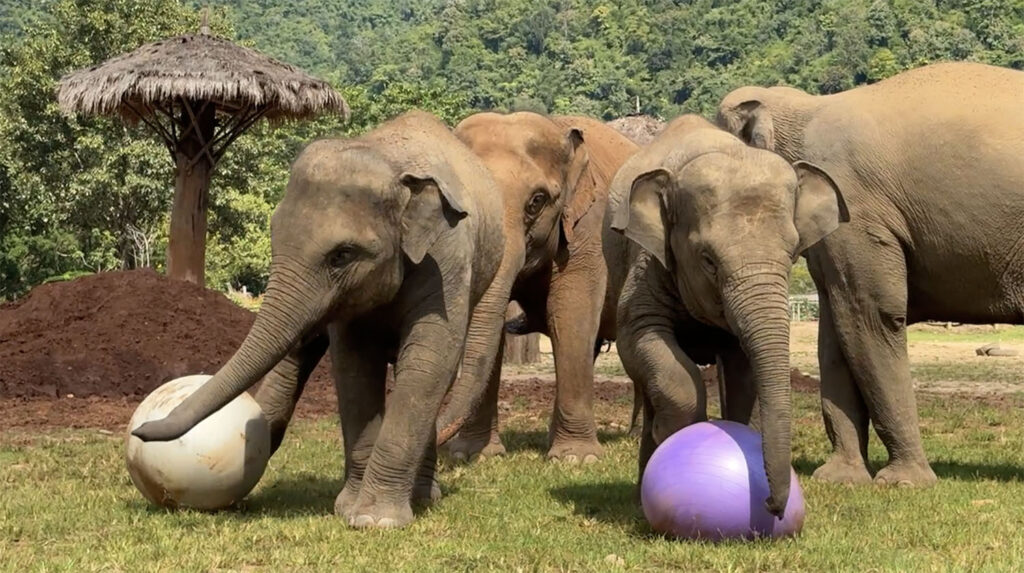
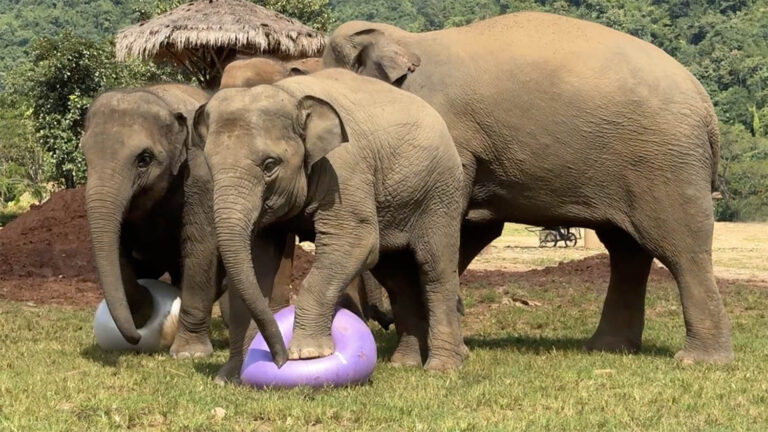
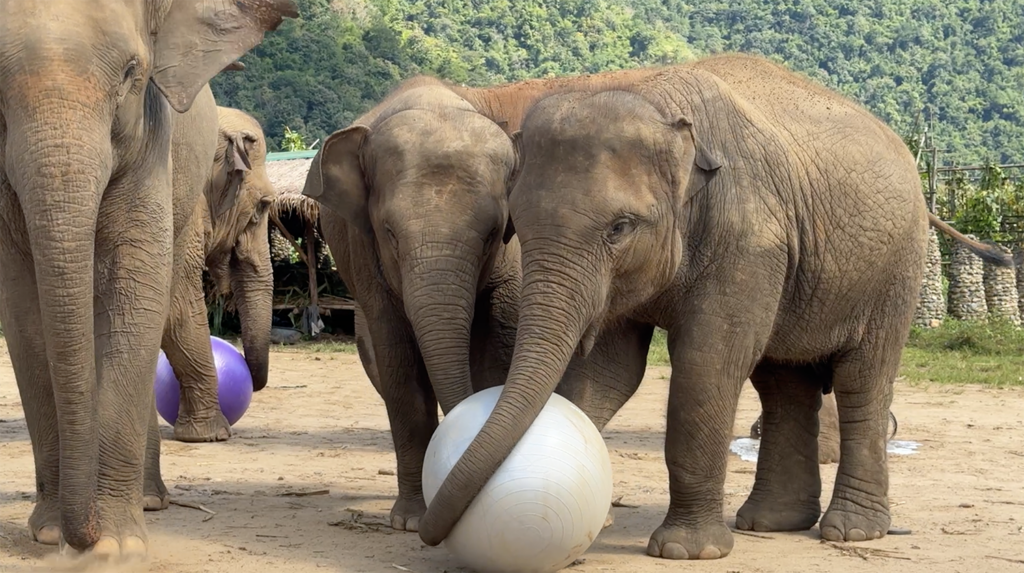
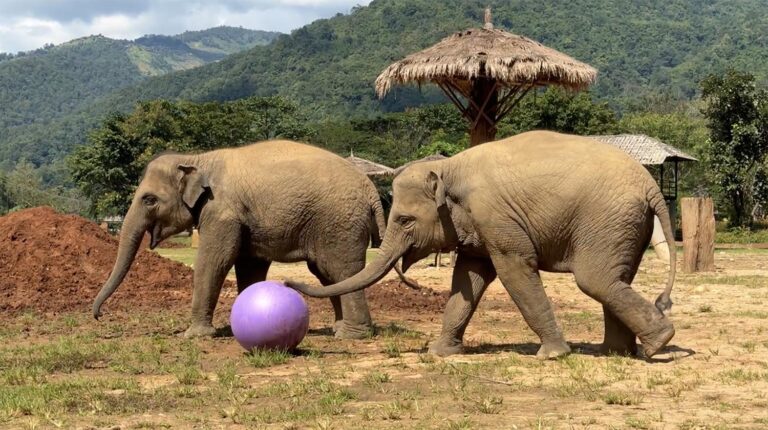
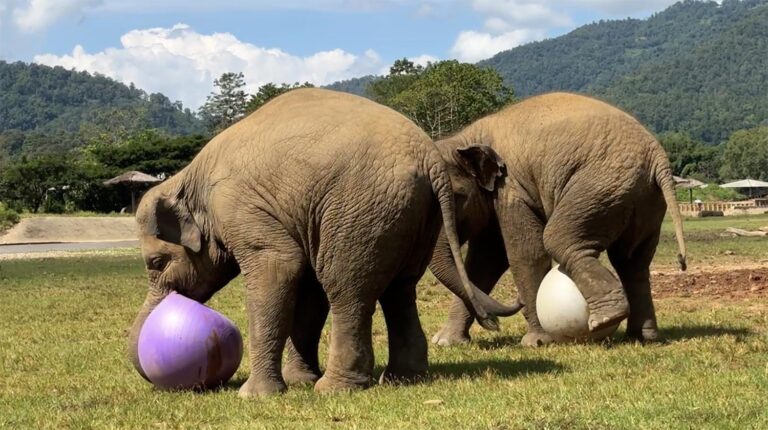
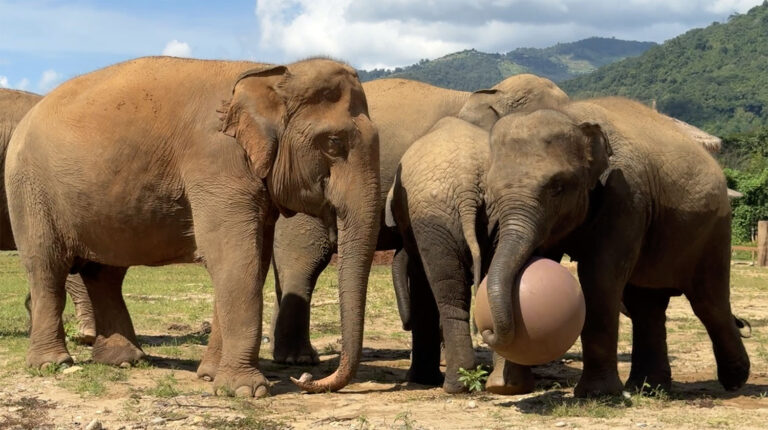
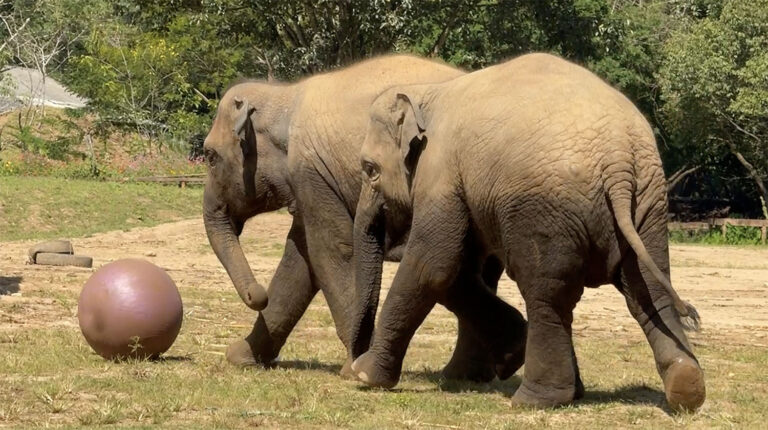
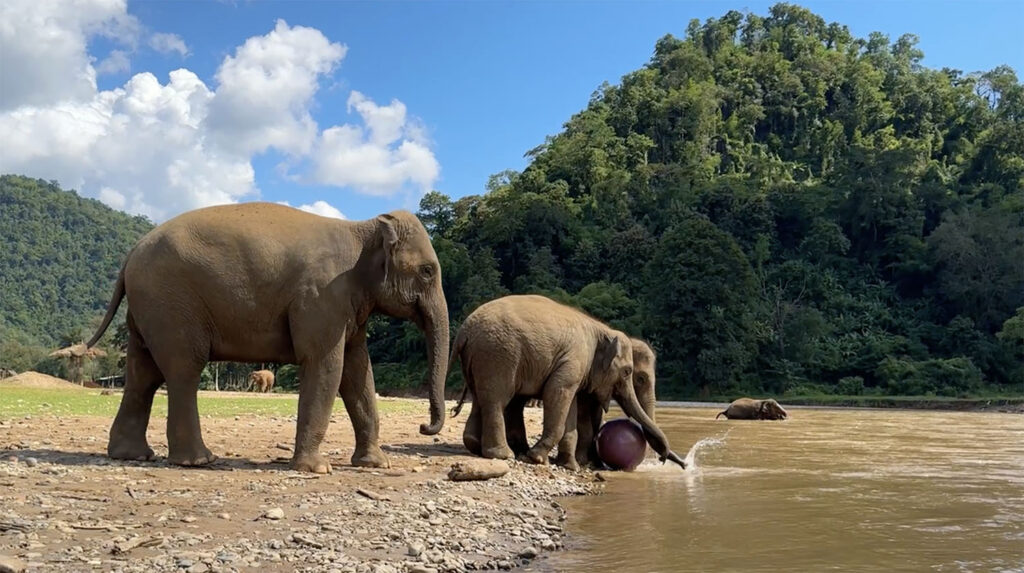
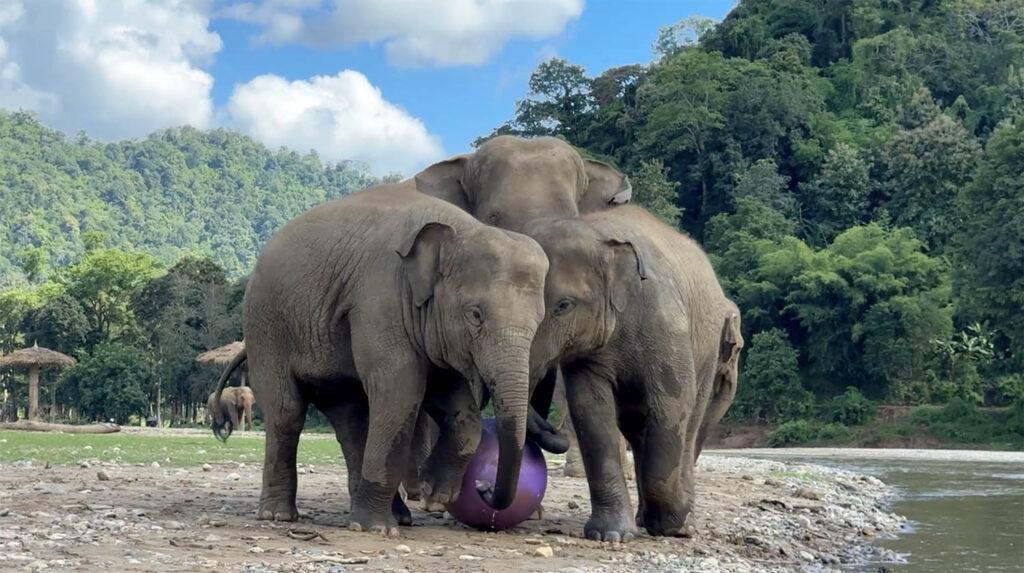
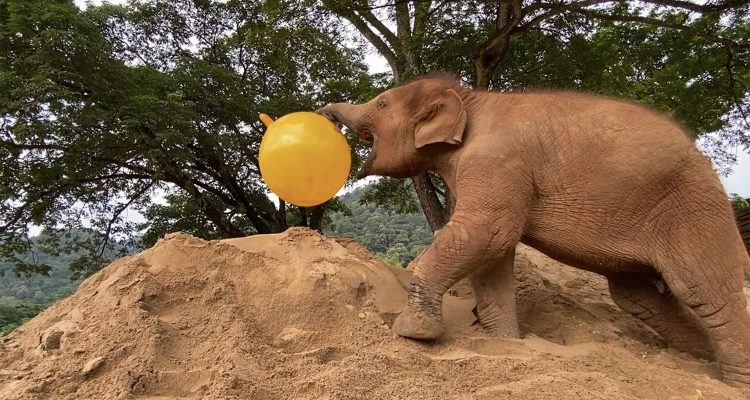
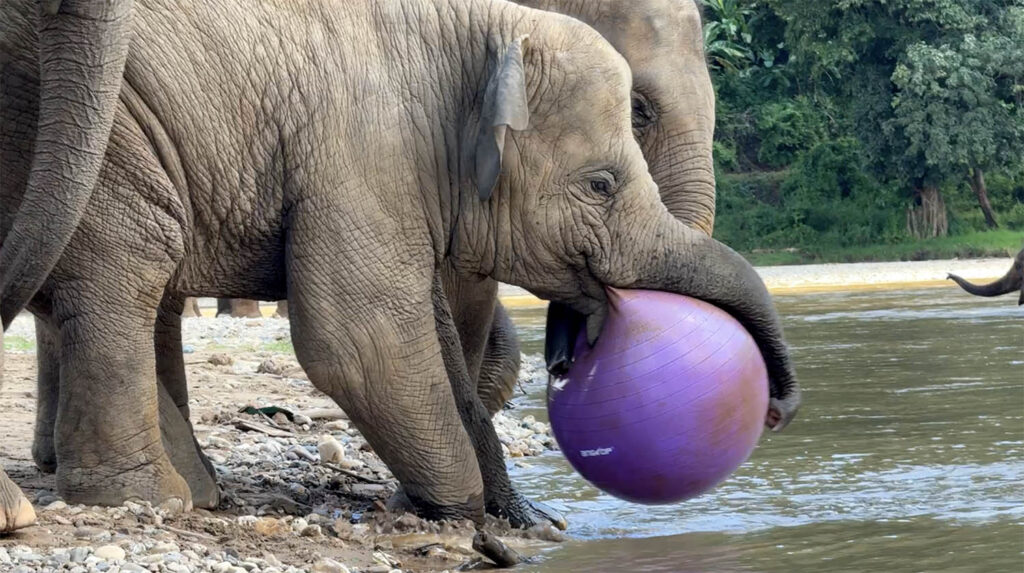
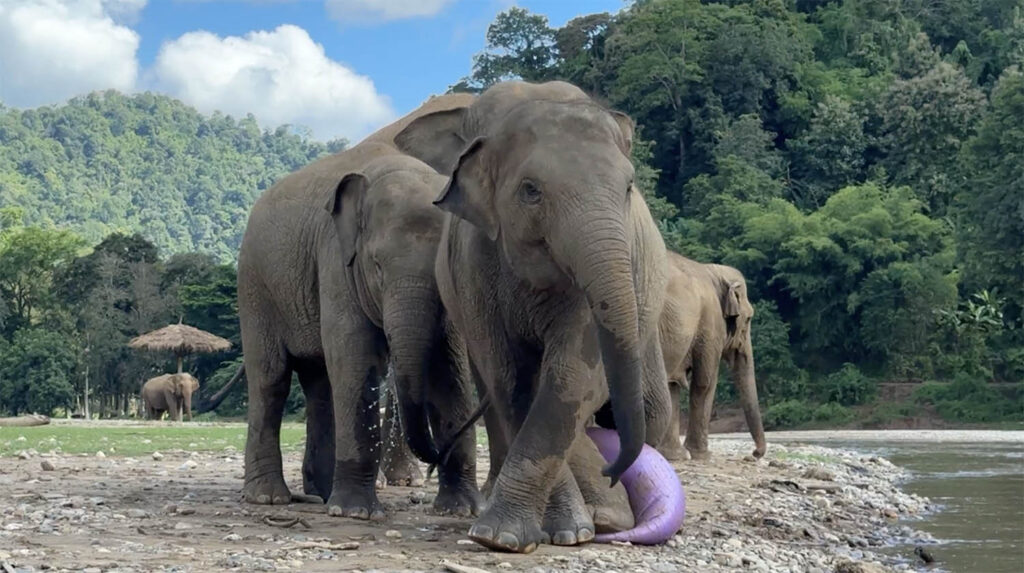
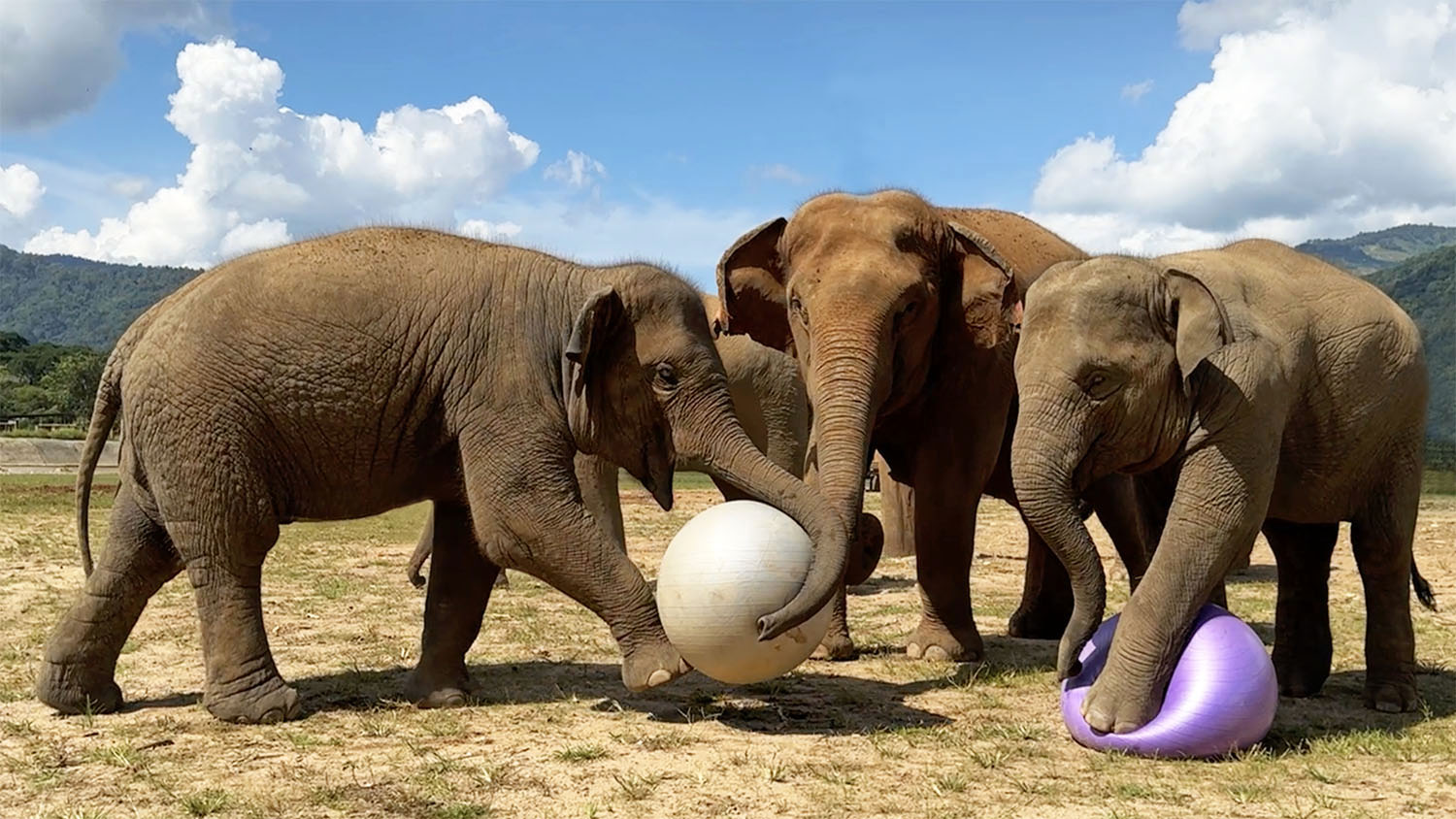
Recently, two colorful yoga balls arrived as a gift for the youngsters at the sanctuary. It did not take long before Chaba and Pyi Mai discovered their new toys. At first, the two approached with careful curiosity, stretching out their trunks to investigate the strange, round objects. Then, one gentle nudge was all it took.
Suddenly, the balls began to roll, and the game was on! Chaba nudged one across the ground while Pyi Mai chased the other with joyful determination. The balls bounced and rolled in unpredictable directions, sending the youngsters racing after them in bursts of pure excitement. The back-leg kicks are especially adorable.
Their lively play soon caught the attention of the others. Lek Lek came trotting over, eager to join the fun, while little Sa Ngae watched carefully, studying the strange bouncing toys before stepping forward to join the fray.
For young elephants, play is much more than simple amusement. It is how they learn, explore their world, build physical confidence, and strengthen the vital social bonds that hold their families together. In a safe and caring environment, their natural curiosity and playful spirit can flourish.
The yoga balls themselves did not last very long—elephant feet are, after all, famously powerful—but the joy they created lingered long after the balls had popped.
Moments like this remind us how important it is that elephants are given the chance to simply be elephants. And when they play, their happiness is impossible to miss.
Did You Know? Elephants are among the most intelligent and social animals on the planet, and their “playtime” is a sophisticated part of their development:
Social Cohension: Just like human children, elephants use play to establish social hierarchies and learn the nuances of communication. It is their way of practicing the complex social interactions they will need as adults.
The "Trunk-Eye" Coordination: Play helps young elephants master the incredible dexterity of their trunks. Chasing a rolling ball requires them to coordinate their trunk movements with their feet, honing the motor skills they will eventually use for complex tasks like foraging and tool use.
Stress Relief: Play is a vital coping mechanism. It lowers cortisol levels and builds resilience, which is particularly important for elephants who have transitioned from traumatic backgrounds to the sanctuary.
Lifelong Learners: While play is most frequent in calves, adult elephants also engage in playful behavior throughout their lives, including swimming, wrestling, and object manipulation, proving that a sense of fun is a permanent part of their nature.
scott